A tender love story set against the most desolate backdrop imaginable, Coward is an inspirational tale about choosing one's own fate, against all odds.
Gracefully finding love in the most hopeless of places, the Belgian director's third feature finds fertile new ground for his interest in imperiled queer identity and masculinity in crisis.
Coward 2026
With just two feature films under his belt: the Cannes' Camera d'or winner Girl (NZIFF 2018) and the Academy Award-nominated Close (NZIFF 2022), Flemish director Lukas Dhont has established himself as a sensitive cinematic bard of queer identities. Without the need for overt drama, his films candidly portray the everyday struggles of characters forced to adjust to the difficulties surrounding them.
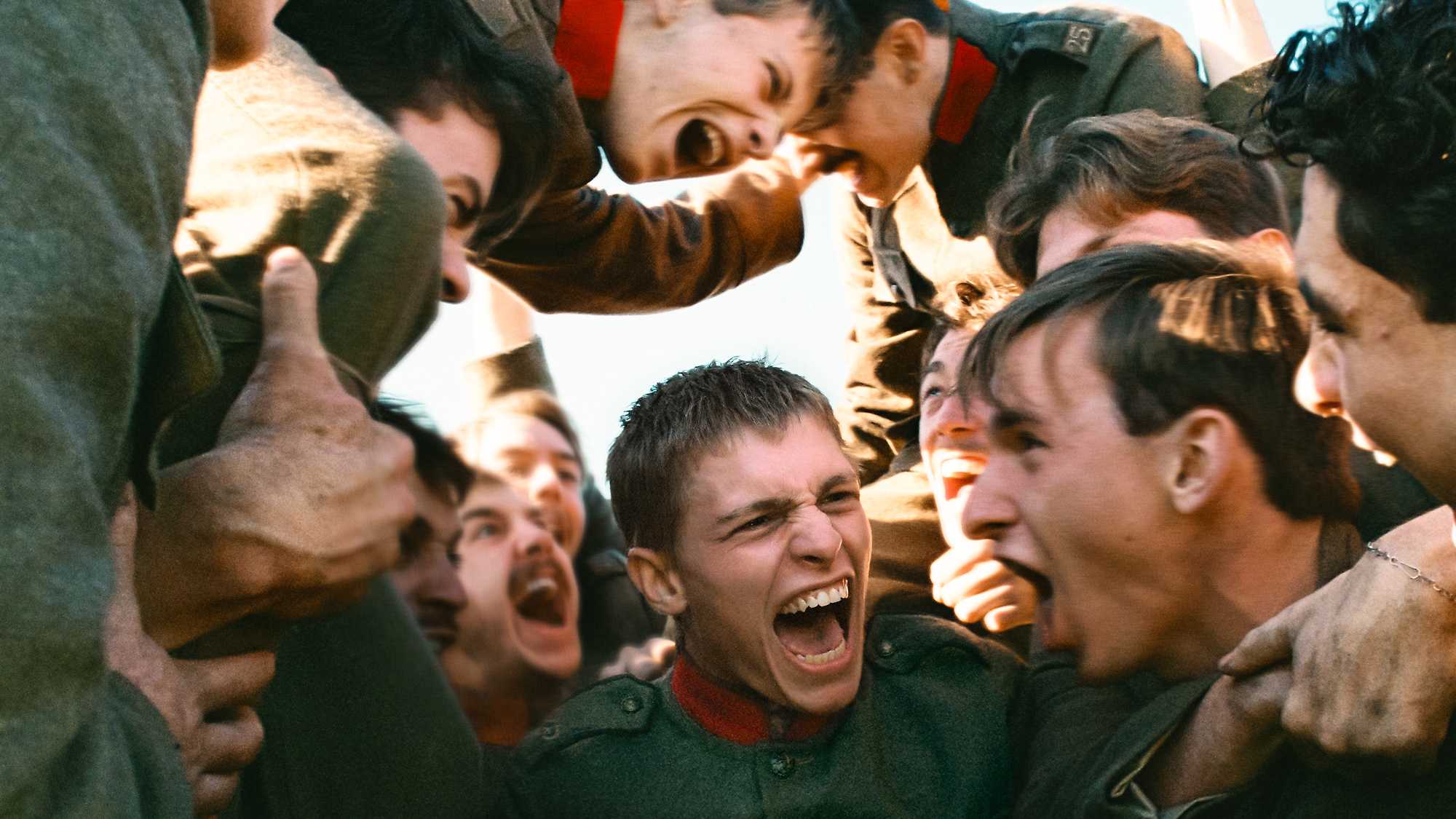
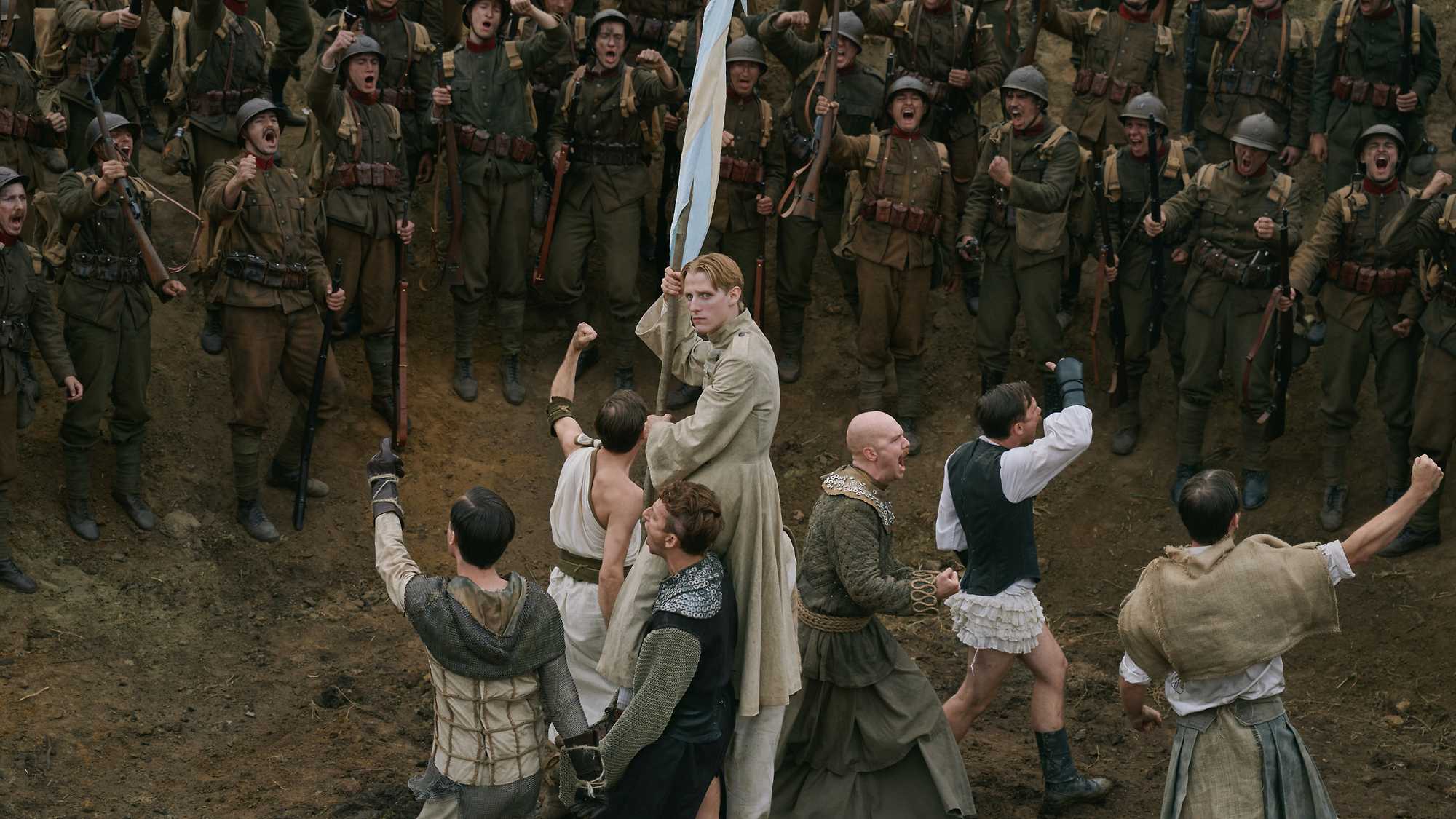
In Coward, which premiered at the Cannes Film Festival 2026, Dhont sends us back one century ago, plunging us into the trenches of World War I. On the Western Front, a platoon of young Belgian soldiers joins the ranks of the foot soldiers fighting the Germans in the mud and dread. Among them is Pierre (Emmanuel Macchia), a tall farmer of few words who soon witnesses the atrocities of the battlefield. When away from the front, the soldiers find respite in the extravagant performances of a cabaret troupe led by the dainty son of a tailor, Francis (Valentin Campagne). His delicate appearance and his imaginative singing and dancing casts a spell on dreamy-eyed Pierre, who feels an intimate connection that he dares not speak about.
In his most ambitious and audacious work to date, Lukas Dhont uses the dramatic landscape and circumstances of history to interrogate his characters (and his audiences) on the price they would pay to be themselves. Coward’s two Cannes-awarded, bedazzling leads (Macchia and Campagne) make it all the more captivating, and Dhont's engrossing storytelling, stunning images and empowering messaging are a fitting finale to close NZIFF 2026.
– Paolo Bertolin